Elephant Sanctuary Tour from Bangkok — Ethical Full Day Guide (2026)
The Living Green Elephant Sanctuary offers one of the most ethical elephant encounters available on an elephant sanctuary tour from Bangkok. Rated 4.8 stars from 2,093 travellers, this full-day experience lets you feed, bathe, and walk alongside rescued Asian elephants — no riding, no shows, no bullhooks. If you're looking for elephant tour thailand bangkok, this sanctuary sets the standard for responsible wildlife tourism in Thailand.
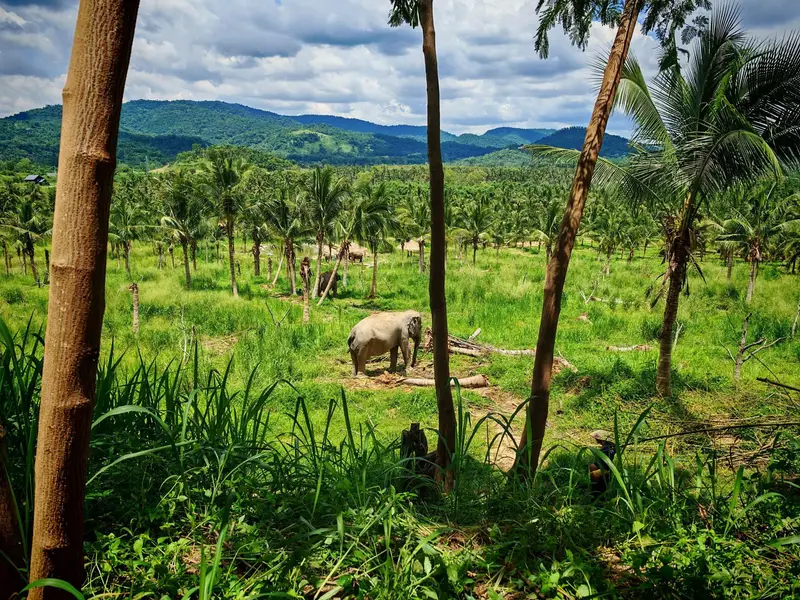
Living Green Elephant Sanctuary: Bangkok's Most Ethical Day Trip
If you've been searching for an elephant tour thailand bangkok that you can feel genuinely good about, Living Green Elephant Sanctuary stands apart from every other option in the region. There is no riding here, no circus performances, no bullhooks, and no tricks performed on command — only rescued elephants living as close to a natural existence as a sanctuary can provide, cared for by mahouts who treat them as individuals with histories, personalities, and needs.
What makes this sanctuary different begins with who these elephants are. Every animal at Living Green has been rescued from logging camps, street begging operations, or abusive tourist facilities. Many carry the physical and psychological scars of their previous lives. The sanctuary's rehabilitation model focuses on allowing elephants to move freely through jungle terrain, socialize with other herd members, and interact with visitors only on their own terms — never under coercion. When you arrive, you are stepping into their space, not a performance arena.
The emotional weight of this experience is hard to describe until you've stood beside a four-tonne elephant named after a Thai flower, learned from her mahout that she was rescued from a street-begging circuit in Chiang Mai, and watched her confidently wade into a river to splash water over her own back in the early afternoon heat. There is a profound calm in witnessing an animal simply being itself. That is what Living Green offers, and it is why over 2,000 travelers have rated this tour 4.8 out of 5 stars.
The full-day format — departing Bangkok at 07:00 and returning around 17:00 — gives you a genuine, unhurried experience rather than a rushed photo opportunity. You will feed the elephants, bathe alongside them in natural water, walk through jungle observing natural behaviors, share a Thai lunch with other responsible travelers, and leave with a deep understanding of both the elephants' stories and the broader crisis facing Thailand's captive elephant population.
Spaces at Living Green Elephant Sanctuary are limited to keep group sizes small and stress on the elephants minimal. Check real-time availability for your travel dates before they fill.
Why Choose an Ethical Elephant Sanctuary
Thailand is home to an estimated 3,800 captive elephants, and the majority of them are employed in the tourism industry. For decades, the dominant model was riding camps and performance shows — facilities where elephants are broken through a process called phajaan, a brutal conditioning method using ropes, hooks, and sleep deprivation to override the animal's natural instincts and make it compliant for human commands. Bullhooks — metal-tipped rods used to prod and puncture the skin — are standard tools at these facilities. The elephants you see giving rides or performing tricks have been systematically traumatized. This is not an activist fringe view; it is documented by veterinary researchers and wildlife organizations worldwide.
Ethical sanctuaries operate on an entirely different philosophy. At a genuine rescue sanctuary like Living Green, the elephant's wellbeing is the organizing principle of every decision. No riding means no back saddles, no continuous weight-bearing that damages spinal structures not designed for it. No shows means no unnatural postures, no command performances, no reinforcement of submission. The absence of bullhooks means mahouts build relationships through positive reinforcement, patience, and years of trust — not fear. Elephants at ethical sanctuaries make choices: where to walk, when to enter water, how close to get to visitors.
The word 'ethical' has become so overused in elephant tourism marketing that it has lost some meaning. There are facilities that advertise as sanctuaries but still offer 'elephant yoga,' elephant painting performances, or rides on bare-back 'natural' saddles — all of which require the same foundational breaking process. The meaningful distinction is whether the elephant can refuse interaction. At Living Green, elephants move freely and visitors follow at a respectful distance. If an elephant turns away or moves off, you do not follow. That boundary is what ethical actually means in practice.
Choosing this type of experience also has a direct economic impact. Every ticket purchased at a no-riding sanctuary diverts revenue away from riding camps and toward the model that prioritizes the animals. Responsible elephant tourism is one of the few market mechanisms that can shift how Thailand's captive elephant population is treated at scale. Your day at Living Green is not only a personal experience — it is a vote for a different industry standard.
What You'll Do at Living Green Sanctuary
The eight hours you spend at Living Green are structured to feel unhurried and immersive. There is no conveyor-belt tourism here — small group sizes mean you spend real time with the elephants, learn their individual stories, and move at a pace that respects both the animals and the experience. Here is what each part of the day involves.
Meet the Rescued Elephants
After arriving at the sanctuary and changing into provided sanctuary clothes, your guide introduces you to the resident herd on their terms — approaching slowly from a distance and allowing the elephants to register your presence before you move closer. Each elephant has a name and a file: your mahout will walk you through where each animal came from, what their life looked like before rescue, and how long rehabilitation has taken. Some elephants approach visitors with curious confidence; others maintain a careful distance.
You learn to read the difference and respect it. This introduction period typically lasts 45 to 60 minutes and gives you a genuinely personal understanding of each animal as an individual rather than a backdrop for photographs.
Feed and Bathe the Elephants
The feeding session is one of the sensory highlights of the day — standing a few feet from a four-tonne elephant as it delicately accepts a bunch of bananas or a segment of sugarcane from your outstretched hand is both thrilling and oddly calming. Guides explain the elephants' dietary needs, how much they eat daily (up to 150 kilograms of food for a healthy adult), and why certain fruits are used as supplements versus staples. The bathing session takes place at a natural water source on the sanctuary grounds — a river or pond where the elephants wade in under no compulsion.
You enter the water with them, help splash and scrub their mud-caked hides, and watch them respond with what can only be described as visible pleasure. Flash photography is not permitted near the elephants at any point; the guides explain this before the session and the reason — flash startles them — makes immediate sense once you are this close.
Sanctuary Walk Through Jungle
In the afternoon, you follow the elephants on a walk through the sanctuary's jungle terrain, covering ground at the elephants' natural pace rather than a human-directed march. The mahouts accompany each elephant but give them wide latitude in choosing their route, stopping points, and pace. You observe natural behaviors that are rarely visible in riding camps or performance facilities: elephants using their trunks to strip bark from trees, pushing against trunks to scratch, communicating with low rumbles, and navigating steep terrain with startling agility.
Your guide narrates throughout, contextualizing what you're watching within the broader ecology of Asian elephant behavior. The walk typically covers two to three kilometers of jungle trail over 60 to 90 minutes, ending back at the main sanctuary area in time for departure.
Your Full Day Itinerary
-
07:00
Depart Bangkok
Your air-conditioned minivan departs from central Bangkok. The pickup location is confirmed after booking. The journey to the sanctuary takes approximately 2.5 hours — bring a light snack and enjoy the changing landscape as the city gives way to rural Thailand.
-
09:30
Arrive at Living Green Elephant Sanctuary
You are welcomed to the sanctuary with a cold drink and a brief orientation from your guide. You change into sanctuary-provided clothes (dark colors that won't alarm the elephants) and receive an introduction to the facility's rescue mission, the individual elephants in residence, and the ethical guidelines for the day.
-
10:00
Meet the Rescued Herd
Approach the elephants at the sanctuary's open grounds. Your mahout introduces each elephant by name, shares their rescue story, and explains their personality and current rehabilitation progress. This is unhurried observation and gentle introduction — no posing, no forced proximity.
-
11:00
Fruit and Vegetable Feeding Session
Participate in the supervised feeding session using fruits and vegetables prepared by the sanctuary. Guides explain each elephant's dietary preferences and demonstrate safe hand-feeding technique. You will be close enough to feel the bristled tip of a trunk against your palm.
-
11:45
Elephant Bathing in Natural Water
Accompany the elephants to the sanctuary's natural water source for the bathing session. Enter the water, help scrub and splash, and watch the elephants respond with natural enjoyment. Waterproof bags are provided for phones and cameras.
-
12:30
Traditional Thai Lunch
A generous Thai buffet lunch is served at the sanctuary's open-air dining area, featuring rice dishes, vegetables, soups, and fresh fruit. This is a relaxed social break where you can compare notes with other travelers and ask guides any questions before the afternoon session.
-
13:30
Jungle Walk with the Elephants
Follow the elephants through two to three kilometers of jungle terrain, observing natural behaviors in their habitat. The walk is guided and unhurried, covering forest paths, riverside stretches, and open clearing areas. Closed-toe shoes are essential for this section.
-
15:00
Free Time and Farewell
Spend the remaining sanctuary time revisiting your favorite elephants, taking final photographs (without flash), browsing the sanctuary's small ethical merchandise area, or simply sitting quietly near the herd. Your guide is available for any final questions about elephant welfare or conservation.
-
15:30
Depart Sanctuary for Bangkok
Board the minivan for the return journey to Bangkok. The drive takes approximately 2 to 2.5 hours depending on traffic.
-
17:00
Arrive Back in Bangkok
Drop-off at the original Bangkok meeting point or centrally agreed location. Exact return time may vary by up to 30 minutes depending on road conditions.
Important Things to Know
What to Bring
- Comfortable clothes you don't mind getting muddy — the sanctuary provides a change of dark-colored tops but light trousers or shorts from home are fine
- Closed-toe shoes or sturdy sandals with ankle support for the jungle walk — flip-flops are not suitable for the terrain
- Sunscreen applied before arrival (reef-safe formulas preferred near the water)
- Insect repellent — the jungle walk passes through areas with mosquitoes, particularly in the wet season (June through October)
- Camera without flash capability enabled — bring a waterproof case or dry bag for the bathing session
- Small backpack or day bag to hold personal items during the walk
- A light layer or rain poncho if visiting during the monsoon season
Not Allowed
- Riding elephants — this is a strict no-riding sanctuary; the rule applies to all visitors without exception
- Using or bringing bullhooks, sticks, or any implement near the elephants
- Flash photography at any point near the elephants — flash startles them and is prohibited throughout the day
- Feeding elephants outside the supervised session — do not bring your own food items to offer the elephants
- Loud noise, shouting, or sudden movements near the herd
- Approaching elephants from behind or attempting to touch their faces or eyes without mahout guidance
Ethical Guidelines
Living Green operates on a consent-based interaction model. Elephants are never corralled toward visitors, and if an elephant moves away from a group, visitors are asked to remain stationary rather than follow. The sanctuary requests that all visitors approach the herd slowly, speak quietly, and take cues from the mahouts about when and how to engage.
Photography is encouraged but the elephants' comfort takes priority over the perfect shot — if a mahout asks you to lower your camera or step back, this is not a request, it is a requirement. The sanctuary also asks that visitors avoid sharing images on social media that suggest riding occurred or that show elephants in distressed postures.
How This Differs from Riding Camps
At a conventional riding camp, the day's structure is built around what the elephant can be made to do for the tourist. At Living Green, the day's structure is built around what the elephant naturally does and what the tourist can observe respectfully. There are no saddles on the premises.
There are no performance areas. Mahouts carry no bullhooks — guidance is through voice commands built on years of trust. The elephants' living area is open jungle rather than a cement pad.
These are not aesthetic differences; they reflect fundamentally different philosophies about the relationship between humans and wild animals in captivity.
Who This Tour Is For
This tour suits animal lovers who want a meaningful encounter with elephants without contributing to exploitative practices. It is particularly rewarding for responsible travelers who have researched elephant tourism and specifically sought out a no-riding, no-shows alternative. Families with children aged five and older will find the day genuinely educational — the rescue stories, the feeding session, and the bathing experience create lasting impressions for younger visitors in a way that no classroom lesson can replicate. Solo travelers frequently cite this as one of their most memorable days in Thailand; the small group format makes it easy to connect with guides and other travelers. Couples looking for an experience that goes beyond typical tourist activities will find the emotional depth of the sanctuary unexpectedly moving. Wildlife photographers with an interest in ethical wildlife documentation will appreciate the extended, unhurried access to the herd.
The day involves moderate physical activity — approximately two to three kilometers of walking on uneven jungle terrain, wading into water during the bathing session, and standing for extended periods. Most reasonably fit adults will find the pace comfortable, and guides adapt the walk for the group's fitness level. The setting is outdoor and exposed to the elements, so preparation for heat and occasional rain (in season) is important.
Not suitable for
- Pregnant women — the jungle terrain involves uneven ground and physical activity that is not recommended during pregnancy
- Individuals with severe mobility limitations — the jungle walk and water activities require the ability to navigate uneven paths and wade in water
- Children under five years old — the proximity to large animals and the length and physical demands of the day are not appropriate for very young children
Frequently Asked Questions
Is this actually an ethical sanctuary or just marketing?
Living Green Elephant Sanctuary operates a strict no-riding, no-shows, no-bullhook policy that is enforced throughout your visit, not just described in promotional materials. Elephants move freely through open jungle terrain and interact with visitors on their own terms. The mahouts carry no coercive tools and use positive reinforcement built on long-term relationships with individual elephants. The sanctuary is independently reviewed by over 2,000 travelers who confirm these practices, and the absence of riding saddles, performance areas, and restraint equipment is visually verifiable from the moment you arrive.
How far is the sanctuary from Bangkok and how do we get there?
The sanctuary is approximately 150 kilometers from central Bangkok, roughly a 2.5-hour drive by air-conditioned minivan. Transport is included in the tour price. Pickup takes place at a central Bangkok location confirmed after booking, and the drop-off at the end of the day is at the same point. The total return transfer time is approximately five hours, which is factored into the eight-hour day duration. There is no public transport option to the sanctuary, making the included transfer essential.
What is the difference between this sanctuary and elephant riding camps?
Riding camps require elephants to be broken through a process called phajaan — a systematic use of restraint, sleep deprivation, and painful tools to override the animal's natural instincts and make it compliant. Bullhooks are used daily to maintain control. The elephants perform unnatural behaviors on command for tourist entertainment. At Living Green, none of this is practiced. Elephants were rescued from such facilities and are rehabilitated toward natural behavior. Visitors observe and interact respectfully with animals that have genuine freedom of movement. The experience is fundamentally different in every dimension: the elephant's physical condition, psychological state, and daily life.
Can children participate in the elephant bathing session?
Yes, children aged five and older can participate in the bathing session alongside adults. The water used for bathing is a shallow natural water source — typically a river or pond — and guides supervise the session carefully. Children are given guidance on safe positioning near the elephants before entering the water. The experience tends to be particularly memorable for children, who often form an immediate emotional connection with the animals. Children under five are not permitted on this tour due to the proximity to large animals and the physical demands of the full day.
What other animal-friendly experiences are available from Bangkok?
Bangkok and the surrounding region offer several responsible wildlife experiences for travelers who prioritize animal welfare. If you are interested in expanding your Thailand itinerary beyond this elephant sanctuary tour from Bangkok, research sanctuaries that hold memberships with recognized ethical tourism organizations and independently verify no-riding, no-shows policies before booking. For more experiences, see our tours in bangkok thailand page.
What Travelers Are Saying
We brought our two kids, aged seven and ten, and I genuinely did not know how to explain ethical tourism to them before we went. I didn't need to — the guide did it better than I ever could. When my son asked why there were no saddles and the guide explained the rescue stories of each elephant, I watched my kid's face change. He understood. We fed them bananas, got completely soaked during the bathing session, and walked through the jungle for an hour watching these enormous animals just be themselves. No tricks, no rides, no performance. Just elephants living their lives and us being quietly privileged to watch. This was the best day of our entire Thailand trip.
I've been to Thailand four times and always avoided the elephant camps because I knew what went on behind the scenes. This was the first elephant experience I'd ever booked and I'm so glad I finally did it. The sanctuary is about two and a half hours from Bangkok but the drive goes quickly and you arrive to this peaceful jungle setting where the whole atmosphere immediately tells you something is different here. The mahout who looked after us introduced each elephant by name and told us where they came from. The one I spent the most time with, a female named Malee, was rescued from a trekking operation in Chiang Mai seven years ago. I fed her sugarcane, bathed with her in the river, and walked behind her through the jungle for over an hour. I cried on the way back to Bangkok. Highly, highly recommend.
My partner and I almost booked a different elephant experience because it was slightly cheaper, but after reading about the no-riding sanctuaries we changed our plans and are so relieved we did. The difference is immediately obvious when you arrive — there are no riding platforms, no performance stages, no tools hanging from the mahouts' belts. Just open space and elephants moving freely. The feeding session was incredible, the bathing was chaotic and hilarious and wonderful, and the jungle walk gave us a perspective on these animals that no zoo or riding camp ever could. The guide was knowledgeable and clearly passionate about the sanctuary's mission. The Thai lunch was also genuinely delicious. A perfect day from start to finish.